Scottish Shortbread

January 26, 2012

in Cookies,Index,International,Recipes,Shortbread

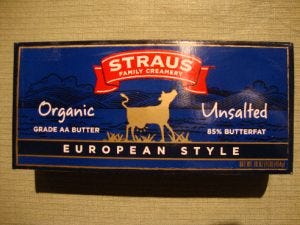
These buttery crunchy/tender cookies, made only from flour, butter, and sugar, owe their deliciousness to the quality of the butter. So be sure to use the best you can find. Fortunately, many European Style butters are available in our supermarkets: Plugra, Kerry Gold, and Strauss, for example, and they have higher butterfat contents (85 percent in some cases) than conventional brands such as Land O’Lakes (80 percent). And what the butter tastes like depends on what the cows were eating.

Cammie Mitchell Hinshaw, a member of our family, is a third generation Scot who learned how to make classic Scottish Shortbread from her grandmother, Gertrude. And now Cammie has taught me what she learned. To make the dough, Cammie says, “My grandmother mashed the sugar into the butter—salted, not unsalted—with her hands, then worked in the flour.”

Cammie also mixes the dough by hand, squishing all the ingredients together in a large bowl until they gather into a firm mass. Many shortbread recipes substitute rice flour for a portion of the wheat flour to give the cookies a tender crunch. I like what rice flour does, so I added some. Here’s where you can read more about rice flour and British Shortbread.

Just for the heck of it, I decided to mix the dough with a stand mixer fitted with the flat beater to see what would happen. Here’s the recipe. I’m giving weights and cup measurements. And I’ve included salt because I used unsalted butter. Omit it if using salted butter.

Scottish Shortbread

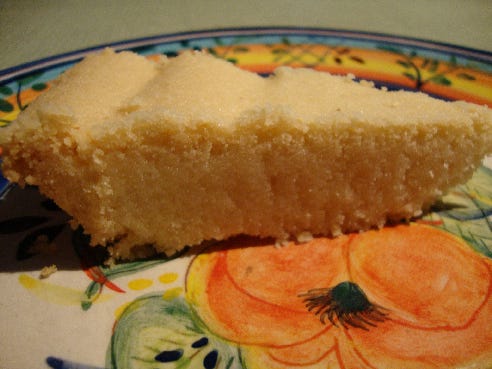
When baked thick, shortbread’s texture is decidedly different compared with thinner versions. Cammie rolls out her shortbread dough ¼-inch-thick and stamps out cookies. Her shortbread is crunchy. I wanted a shortbread that had a range of textures, and I reasoned that I’d be able to achieve that with a thicker shortbread. Often shortbread is baked in special molds or in pie plates. I used a 9-inch one made of ovenproof glass. The bottom diameter of my plate is 7 inches—perfect for shortbread that is ¾-inch-thick. When freshly baked, thick shortbread is tender and slightly chewy, with just a hint of crunch. You can actually eat it on a plate with a fork. Serve with hot tea.

1 ½ cups unbleached all-purpose flour (8 ounces)

¾ cup white rice flour (4 ounces)

½ cup + 1 tablespoon granulated sugar (4 ounces)

½ teaspoon salt

1 cup (2 sticks, 8 ounces) cold unsalted butter, cut into large pieces

Adjust an oven rack to the center position and preheat the oven to 300 degrees. Have ready an ungreased 9-inch ovenproof pie plate. To measure the all-purpose flour, dip dry measures into the flour container, fill to overflowing, and level off. To measure the rice flour, set dry measures on a piece of waxed paper, pour the flour into them to overflowing, and sweep off excess. Combine both flours, sugar, and salt in the mixer bowl. Add the butter pieces and attach the flat beater.

Mix on low speed until the dough forms large clumps that look as though they’ll gather into a single mass. This can take as long as 10 minutes!

Squeeze all the pieces together to form one coherent mass.

Press evenly into the pie plate and prick all over with a fork. I’m told this helps the shortbread cook evenly.

Bake 60 to 70 minutes, or until the shortbread is an even pale sandy color. It should not be darker than a very pale brown. The edge of the shortbread may be slightly raised. The center will seem soft. The for marks will have disappeared.

Cool for 30 minutes on a wire rack, then use a paring knife to release shortbread from sides of pan and cut the cookie into 16 wedges.

Cool completely before removing wedges from the pan. Store airtight. Shortbreads will stay fresh for at least a week. They get crunchier over time.

Share and Enjoy:
  • Facebook
  • Twitter
  • RSS

{ 4 comments… read them below or add one }

Holly Cunningham January 26, 2012 at 11:35 pm

Wish I had one right now! I think I’ll make some this weekend!!

Reply

Greg Patent January 27, 2012 at 8:40 am

Let me know how you like them!

Reply

Kathy Howlett February 23, 2012 at 8:49 pm

I have a problem with the stamped design baking out of my shortbread cookies. The recipe I use is from the Ryecraft stamp people. How could I alleviate this problem or would your recipe work better for stamping? I would like a nice crisp design on the final product. More flour? Pastry flour? Any hints would be appreciated!
Thank you

Reply

Greg Patent April 4, 2012 at 7:49 am

Sorry I took so long to get back to you. Gee, Kathy, I’m not a stamper. Why not make half my recipe as a trial and see what happens. In the meantime, I’ll do some checking to see what I can find out.

Reply

Leave a Comment

Previous post:

Next post: