

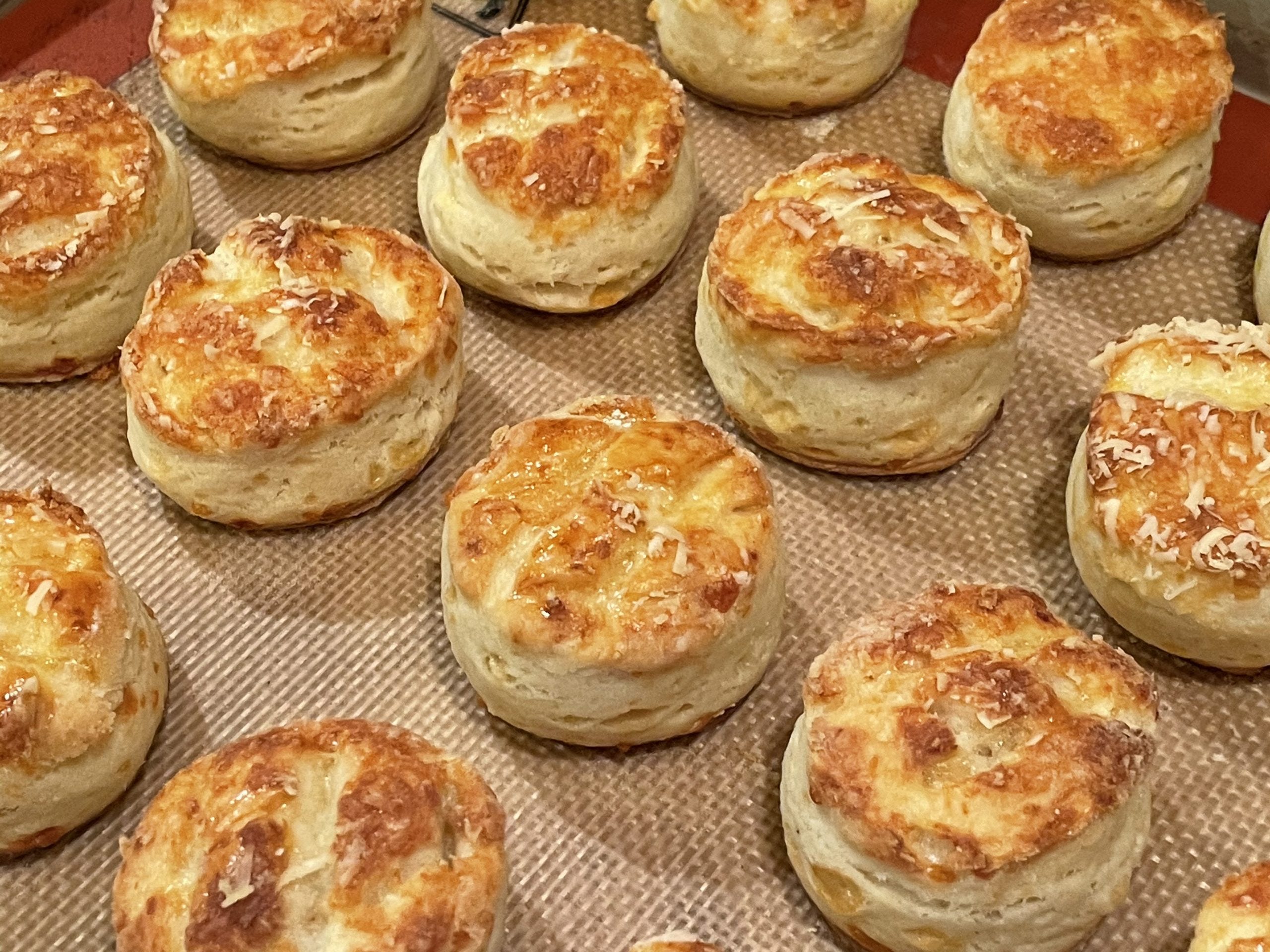
Crisp on the outside and tender inside, these Hungarian Cheese Biscuits are easy and fun to make and very easy to eat.
A Biscuit Made with Yeast Rather than Baking Powder.
Baked Hungarian Cheese Biscuits on baking sheet Take a break from baking sugary treats, and make these cheesy Hungarian pogácsa (pronounced po-GA-tcha). They’ll remind you of our classic American biscuits in shape, but they’re made with yeast instead of baking powder or baking soda. And eggs and sour cream replace the buttermilk. The biscuits are crispy on the outside and tender on the inside. An interesting feature of this recipe is there's no rising time. Once you make the dough, you roll it out, cut biscuit circles, top them with egg glaze and cheese, and bake. The biscuits do rise in the oven.
The Hungarian word for biscuit, roughly translated, is pogácsa, and there are two basic types: salty and sweet. But within each category huge variations exist. A few years ago I got to bake with a real live Hungarian baker in my home kitchen, and she taught me how to make these marvelous tidbits—great to nibble on anytime and to serve with drinks. I met Marika Pal, my new Hungarian friend, one summer when she came to visit her son, Robert and his wife, Judit, in Missoula. Marika baked with me for a couple of days, and we had a marvelous time. She doesn’t speak English, so Judit acted as our interpreter. Since so much of baking is visual and tactile, we really didn’t need many words to understand each other. All of Marika’s measurements are metric, and she weighs all her dry ingredients.
The metric system is sensible and easy so long as you own a kitchen scale. For convenience, I’ve converted her weights and measures to ounces and cups. This recipe makes a large yield, a few dozen pogácsa. You could easily cut quantities in half, but I suggest making the full recipe and freezing leftover biscuits to reheat whenever an unexpected hunger for them strikes. Happy baking!