

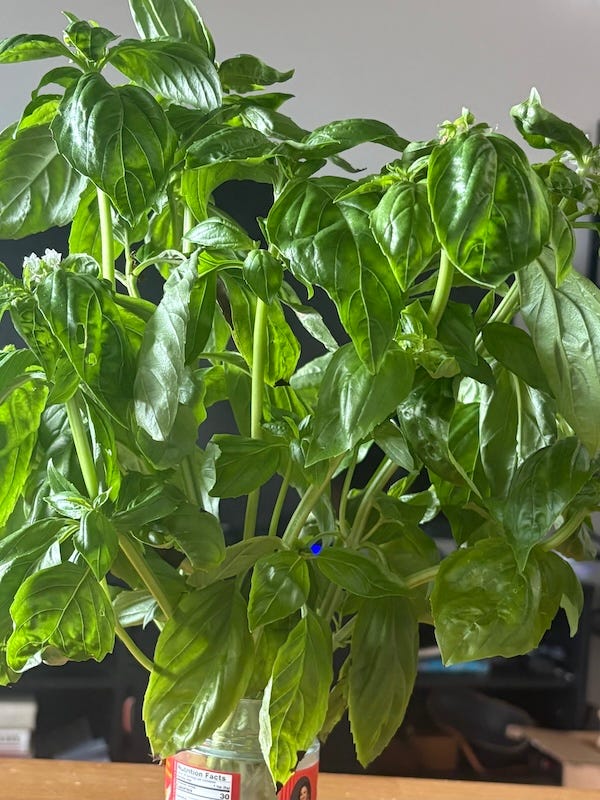
We are so fortunate to have bunches of fresh, fragrant basil at farmers’ markets throughout the year. And, at $3.00 a bunch, that’s an amazing bargain. When we moved to Kaua’i in November, 2021, we had a hard time believing that basil grown at any time but the summer would pack so much flavor. But when I yelled “Wow!” after nibbling on a leaf. That’s all the proof we needed.
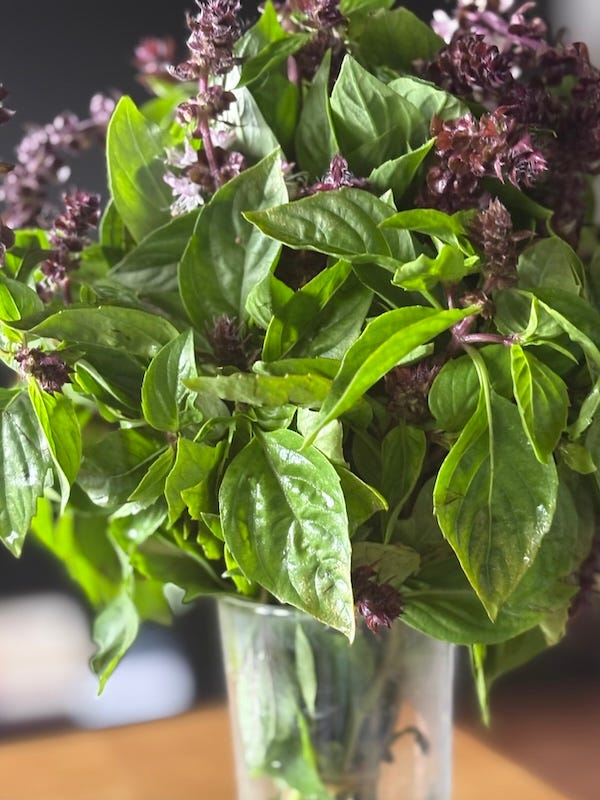
I can buy two basil varieties on Kaua’i—Large-leafed sweet Italian, and anise-flavored Thai. Thai basil’s sturdy leaves make it ideal for stir-fries.
Making Pesto
I make pesto with Italian basil. And I use a food processor. The traditional tools for pesto are mortar and pestle, and the word pesto means pounded. I made pesto that way when we lived in Naples, Italy. Actually I didn’t have a mortar, so I pounded the basil in a sturdy bowl with a wooden spoon. I tore the leaves first to make my job a bit easier, but I have to say, making pesto by hand takes a long time.
Besides basil, you’ll need an excellent olive oil, pine nuts, freshly grated Parmesan and Romano cheeses, garlic, salt, and some butter.
Why butter? Julia della Croce and Marcella Hazan both say it’s for texture and depth of flavor. And I agree. Pesto with butter is super creamy.
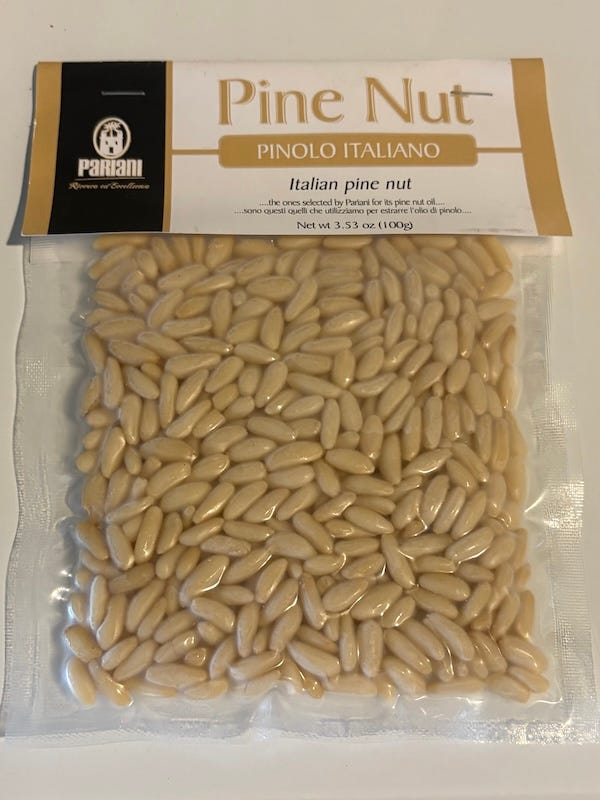
When it comes to pine nuts, I always buy the Italian pinoli. Any good pine nut will be fine in pesto, but the pinoli are the only pine nut I had in Italy and so I continue using it in pesto and in other Italian recipes. Pine nuts should be purchased air tight and stored in the freezer. They are perishable. Once a package is opened, store leftovers, tightly wrapped, in the freezer. And use them within a few months.
I make pesto with a regular size Cuisinart food processor that I bought in a thrift store for $5.00. This machine had been made in Japan, and I’ve since learned that the best quality Cuisinarts were all made in Japan. Lucky me.
My Pesto Recipe
Here are the ingredients for enough pesto for six main course servings. What you don’t use will keep refrigerated for at least a week.
2 peeled garlic cloves
2 ounces basil leaves (for consistency it’s best to weigh the basil)
1/2 teaspoon table salt
2 tablespoons pine nuts
1/2 cup excellent extra-virgin olive oil
1/2 cup (50 grams) freshly grated Parmesan cheese
2 tablespoons (12 grams) freshly grated Pecorino Romano
5 tablespoons butter (salted or not), at room temperature
With the metal blade in place, start the motor and drop the garlic cloves through the feed tube. Process a few seconds until you no longer hear chopping sounds. Turn off the machine.
Add the basil leaves, salt and pine nuts. Pulse a few times to begin chopping the basil and pine nuts. Pour in the olive oil and process 10 seconds. The basil should be finely ground but still have texture. It should not be a puree.
Add the soft butter, and both cheeses. Pulse rapidly about 5 times to incorporate the ingredients. Taste carefully and taste for salt. Add a bit more if you feel the pesto needs it.
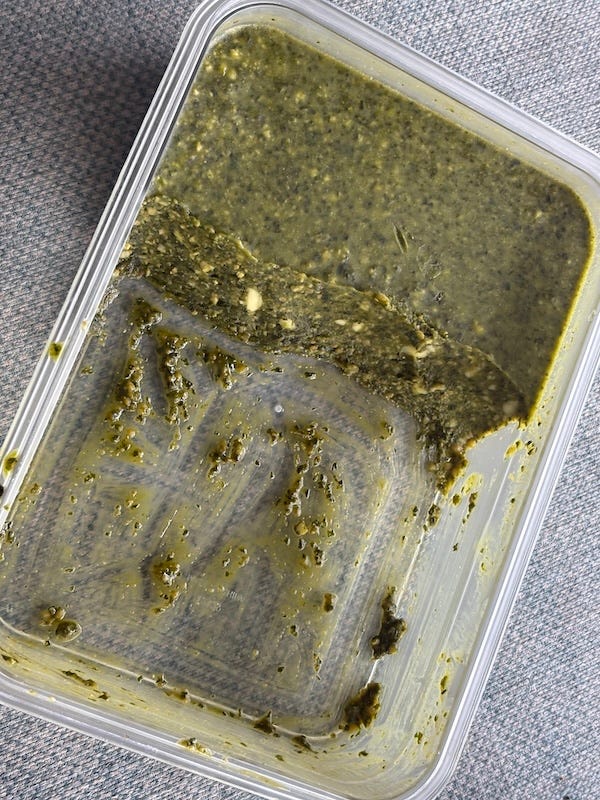
And that’s it. The pesto is ready to use. It keeps well in the fridge for at least a week. Freeze it for longer storage.
I always cook enough pasta for 2 servings. I’ll spoon one-third of the pesto into a heatproof cup and set it aside. For the pasta, I usually choose spaghetti. I’ll weigh 7.5 ounces for Dorothy and me. I cook the pasta in a 3-quart stainless steel pan that measures 9 inches in diameter with 3-inch sides. This is the pan I packed in our luggage. I half-fill it with water and bring the water to a rolling boil over high heat. I salt the water (about 1 tablespoon kosher salt) and add the pasta. In a few seconds when the pasta becomes flexible, I use tongs to immerse the pasta completely in the water. Note: A 4-quart saucepan half-filled with water is a great way to cook pasta for 2 to 4 servings. Use a 6-quart pot half-filled with water to cook pasta (scant 1 1/2 pounds) for 6 servings.
Adjust the heat so that the pasta stays at the boil and cook until it’s al dente. The spaghetti I use cooks in 9 minutes. While the pasta cooks—give it a stir occasionally— stir about a tablespoon of the boiling water into the pesto. This will be the sauce for the pasta.
When the pasta is cooked, drain it well. Return it to the cooking pot and add the pesto. Stir quickly and vigorously to coat the spaghetti evenly with the pesto. Divide into two warmed serving bowls, sprinkle some freshly grated Parmesan or Pecorino Romano on top and serve right away. A green salad is always welcome with pesto.
Have fun!
I can eat pesto by the spoonful's. Thankyou for the recipe. I also learned from your post how to properly store pine nuts in the the freezer. In the past I have had some very stale pine nuts in the kitchen cabinet.
Hi Greg it’s Greg from Waimanalo. I make Pesto all the time also, but I keep it in a canning jar and top it with a thin coat of olive oil after every use. That helps keep it a fresh green and prolong its freshness for a few months. Have a great day🤙🏼